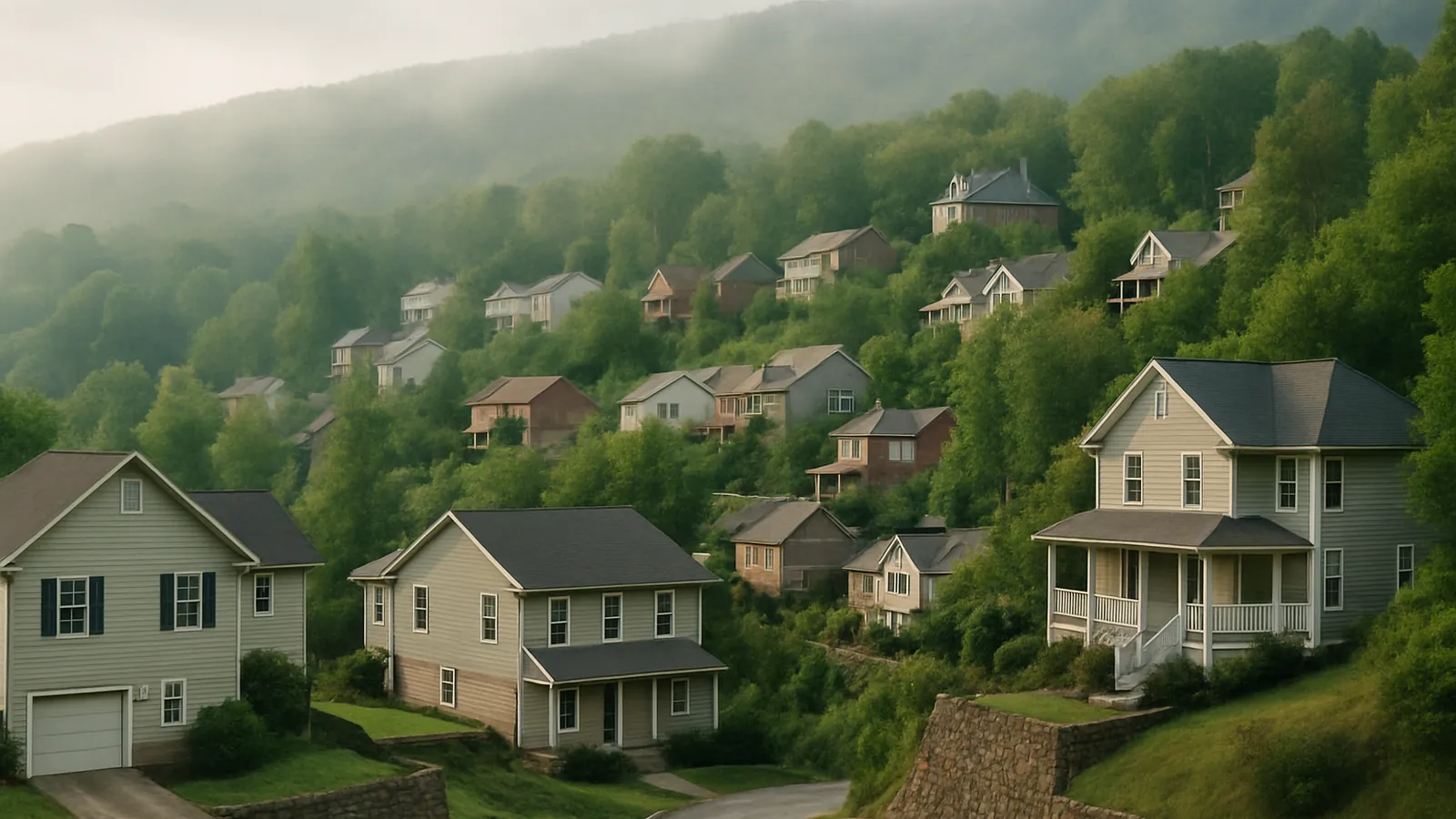
Slab foundation repair in Birmingham runs $3,500–$12,000. The local version of this job is a slab poured across a cut-and-fill line on a benched hillside pad — concrete asked to bridge undisturbed ground on one side and placed fill on the other.
Why the same crack reopens, what red clay adds on top, and when sealing is the wrong purchase.
Two grounds, one slab
A slab is a single rigid plane. On a benched pad it can be spanning material that has been in place for millennia and material that arrived by truck. Those two do not settle at the same rate, they do not respond to moisture the same way, and the concrete has to accommodate the difference somewhere.
It accommodates it by cracking, generally along a line that runs roughly parallel to the original contour of the hillside. When a homeowner tells us the crack has been filled twice and keeps returning in the same place, that repetition is the most useful thing they can say — it is the slab pointing at the boundary underneath it.
What red clay adds
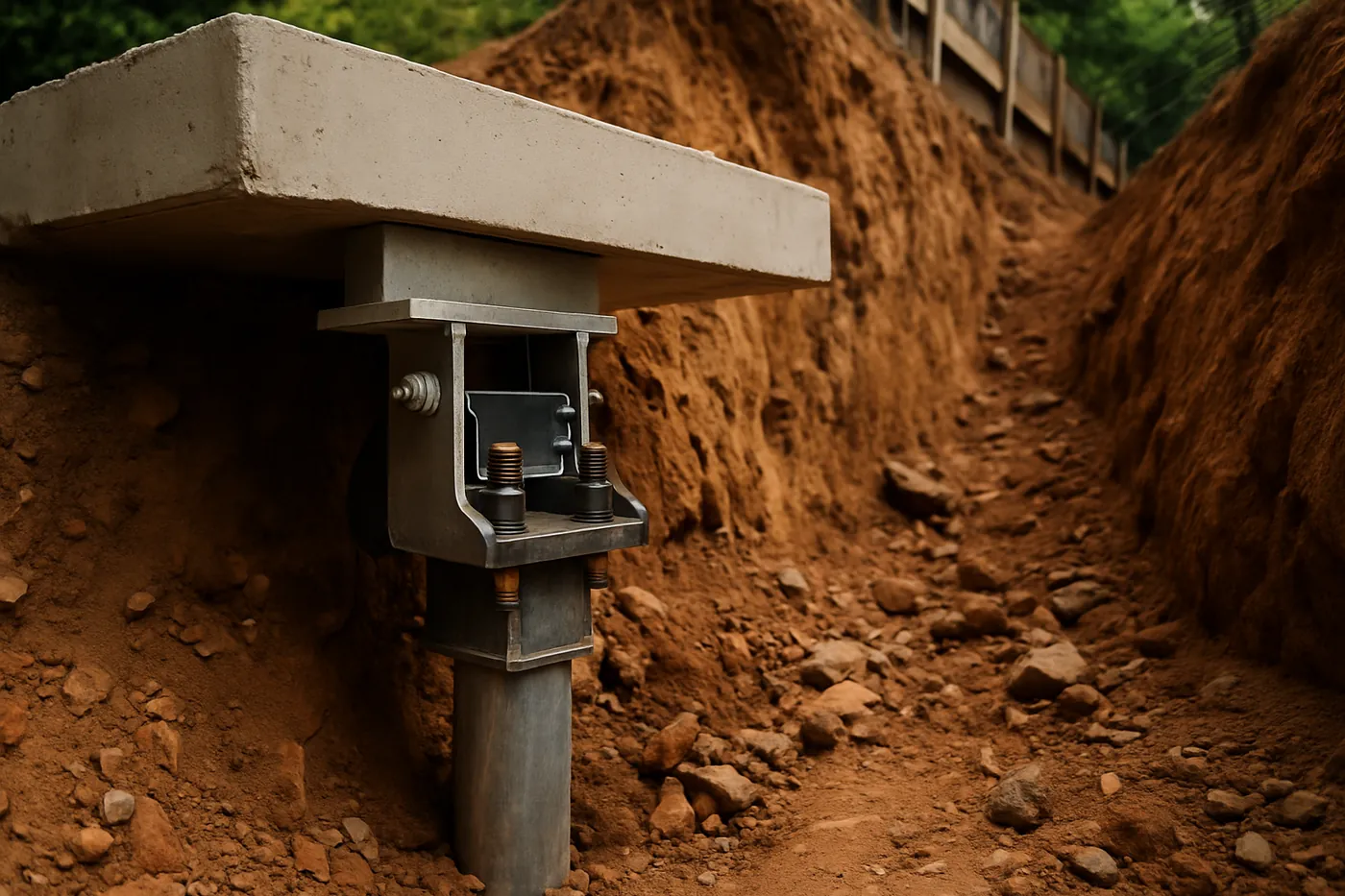
Birmingham’s iron-rich red clay expands as it takes on water and contracts through warm dry stretches, and at 56.6 inches of annual precipitation it gets ample opportunity to do both. That produces the seasonal component: cracks that open a little further in one part of the year and close somewhat in another.
Here is the distinction worth holding onto. Seasonal clay movement reverses. Fill consolidation does not. On most local slabs both are happening at once, and separating them takes elevation readings over the whole footprint rather than an opinion about a crack.
What each symptom usually means
| What you see | Likely cause here | Typical response |
|---|---|---|
| The same crack reopening after repair | A cut-and-fill boundary beneath it | Support the low side, then repair the concrete |
| Floors falling away toward the downhill side | Consolidation over the filled half | Piering the filled portion |
| Cracks that widen dry, narrow wet | Red clay cycling seasonally | Even out the moisture, monitor |
| Hairline map cracking, no displacement | Curing shrinkage | Seal it, no structural work |
| One side higher, tile tenting | Displacement across the boundary | Elevation survey before anyone quotes |
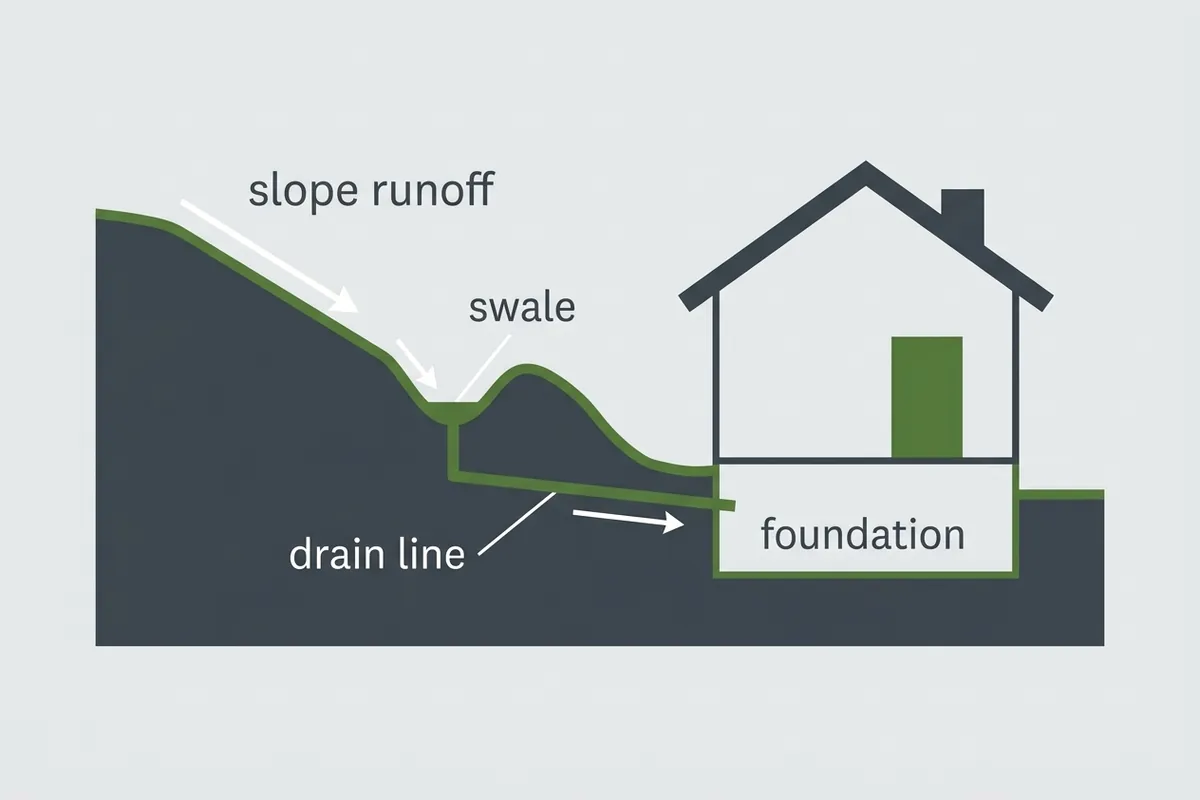
| Water standing against the slab edge | Slope runoff arriving at the house | Intercept it uphill |
The order that holds
Measure, support, then repair the concrete. A crack sealed before the ground under it is stabilized reopens along the same line, and the homeowner reasonably concludes the repair failed when in fact it was performed on a symptom. We run elevations first on every slab call and price the cosmetic work last, after movement has stopped.
Where readings come back flat, we say so and quote sealing alone. That happens often enough to be worth mentioning, and it is priced in the cost guide.
Slabs, answered plainly
What does slab foundation repair cost in Birmingham?
Slab work generally runs $3,500-$12,000, driven by how much of the perimeter needs support and how much of the slab sits over the filled portion of the pad. A slab spanning a cut-and-fill line is the local version of this job, and where that line falls decides most of the number.
Why does my slab crack in the same place every time?
Frequently because that line is where two different grounds meet. Concrete poured across the boundary between undisturbed cut and placed fill is being asked to bridge materials that behave differently under load. It cracks where the support changes, and refilling the crack does not change the support.
Can a slab be repaired without piers?
Sometimes. Where elevations are close to flat and the cracking is shrinkage rather than displacement, sealing and monitoring is the honest answer. Where one part of the slab has dropped relative to the rest, something has to carry that load, and sealing the visible crack is cosmetic work on a structural condition.
Is post-tension slab repair different here?
Post-tension slab repair is different here, and it matters on newer construction. Post-tension slabs carry steel tendons under high tension, and drilling or cutting without locating them first is dangerous. Tell any contractor the slab type before anyone brings equipment, and expect the tendon layout to govern where anything can be cut.
What about red clay under the slab?
It contributes. Iron-rich red clay expands when saturated and shrinks in dry warm months, and 56.6 inches of annual rain gives it plenty to respond to. On a benched pad that seasonal movement rides on top of the fill consolidation rather than replacing it, which is why elevation readings matter more than any single crack.
Get a free Birmingham foundation evaluation
Describe what the house is doing — a crack that keeps opening, a door that stopped latching, floors that fall away toward one side, a retaining wall starting to lean. If you already hold a bid from somebody else, bring it and we will go through the warranty with you. Same working day reply.