Foundation piering in Birmingham runs $4,000–$15,000 for most repairs, piers commonly $1,200–$3,000 each. On benched hillside pads the pier count follows how much of the footprint sits over the filled half — because the cut half was never going to move.
How a level pad gets manufactured on a slope, why the pier log matters more than the pier count, and what belongs in a bid here.
Level ground on a ridge is a construction product
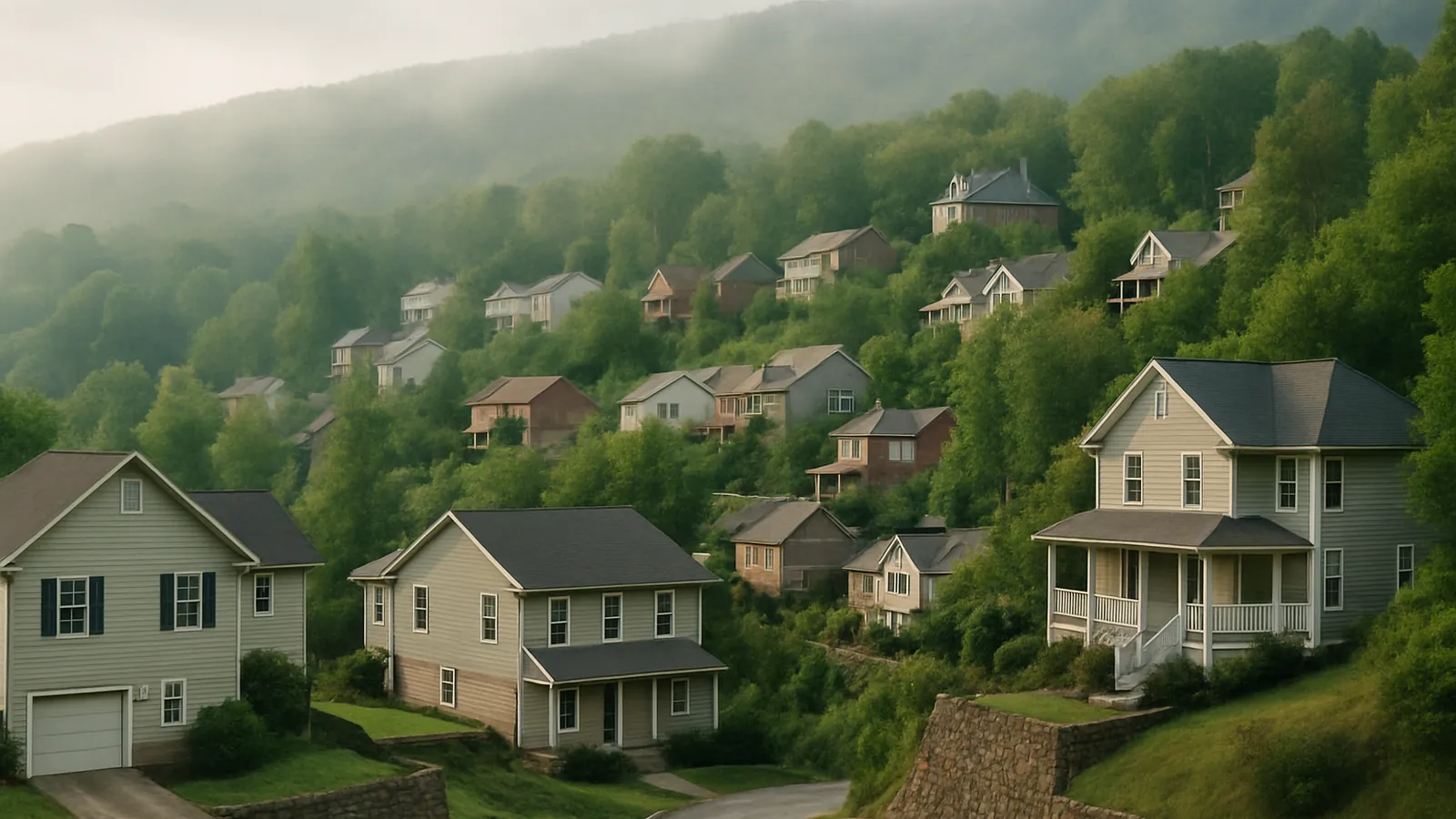
Birmingham sits in ridge-and-valley country, and the communities that climb Red Mountain and Shades Mountain are on genuine slope. A house needs a level pad, and on a slope that pad has to be created: the machine cuts into the hillside on the uphill side and places the excavated material downhill to build the low side up.
So a single foundation frequently spans two entirely different grounds. Uphill, it bears on material that has been consolidating since long before anyone lived here. Downhill, it bears on soil that was moved into position during construction. However well that fill was compacted, it is younger, looser, and still settling under load in a way the cut side is not.
Which is why the movement always goes downhill
This is the part that makes Birmingham diagnosable. Clay markets produce movement that reverses with the seasons. Karst markets produce movement wherever the rock happens to be missing. A benched pad produces movement with a direction — consistently toward the low side, consistently over the filled half, and typically appearing in the first decade rather than the fourth.
When floor elevations come back low on the downhill portion and flat across the uphill portion, that is not a coincidence to be explained. That is the pad reporting how it was built, and it tells us where piers belong and, equally usefully, where they do not.
The pier log is the document that matters
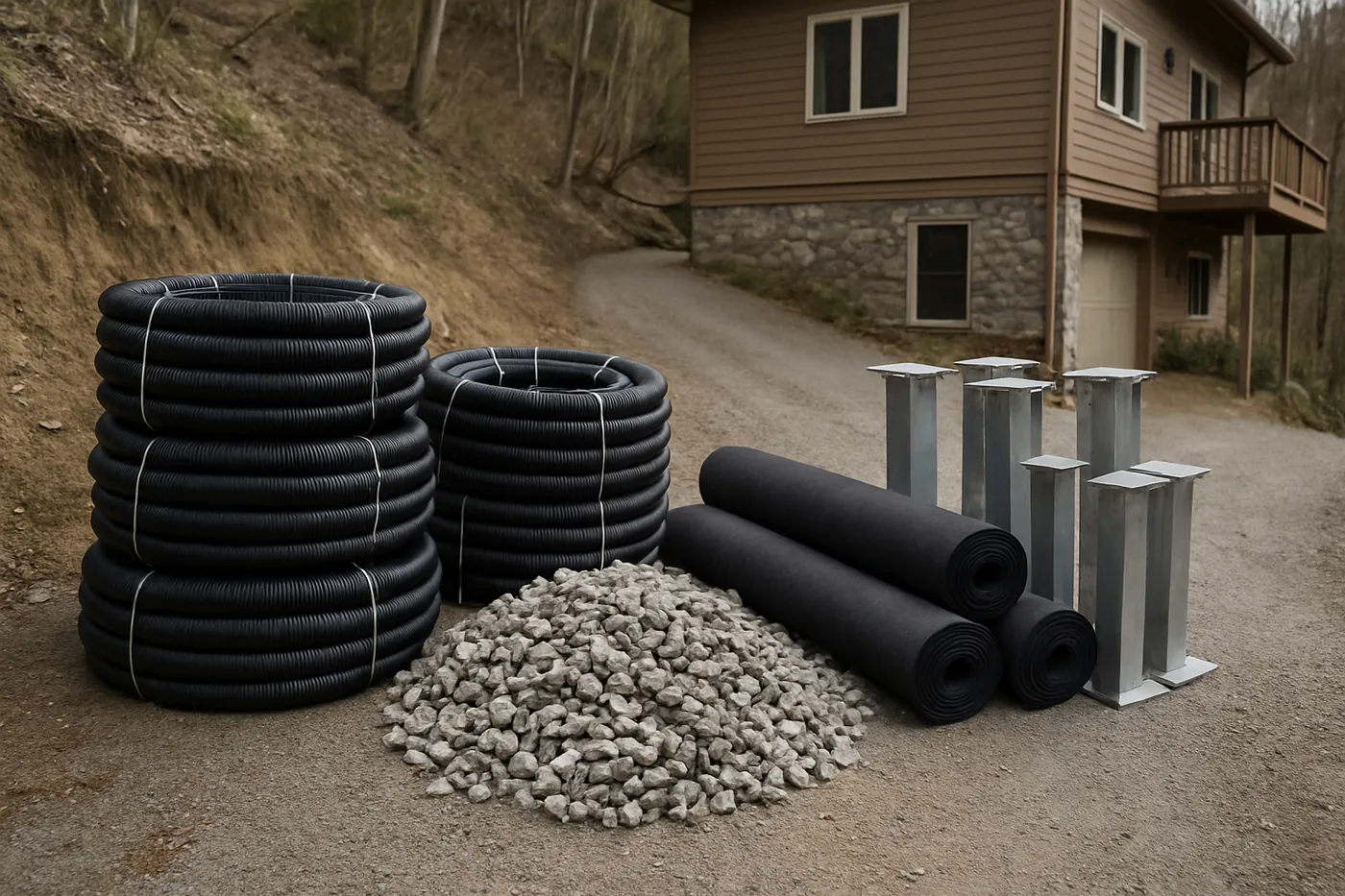
Most homeowners compare bids on pier count. In this metro the more revealing number is what each pier landed on. An industrial city has a great deal of made ground — fill placed during a century of building, regrading, and rebuilding — and a pier that stops in dense fill feels exactly like a pier that reached undisturbed material until it does not.
Ask every bidder three things: what depth the price assumes, what the per-foot rate is beyond it, and whether you will receive a per-pier log recording depth and termination. A company that records those is telling you it expects to be checked.
Piering compared with the alternatives
| Approach | Typical cost | Right when |
|---|---|---|
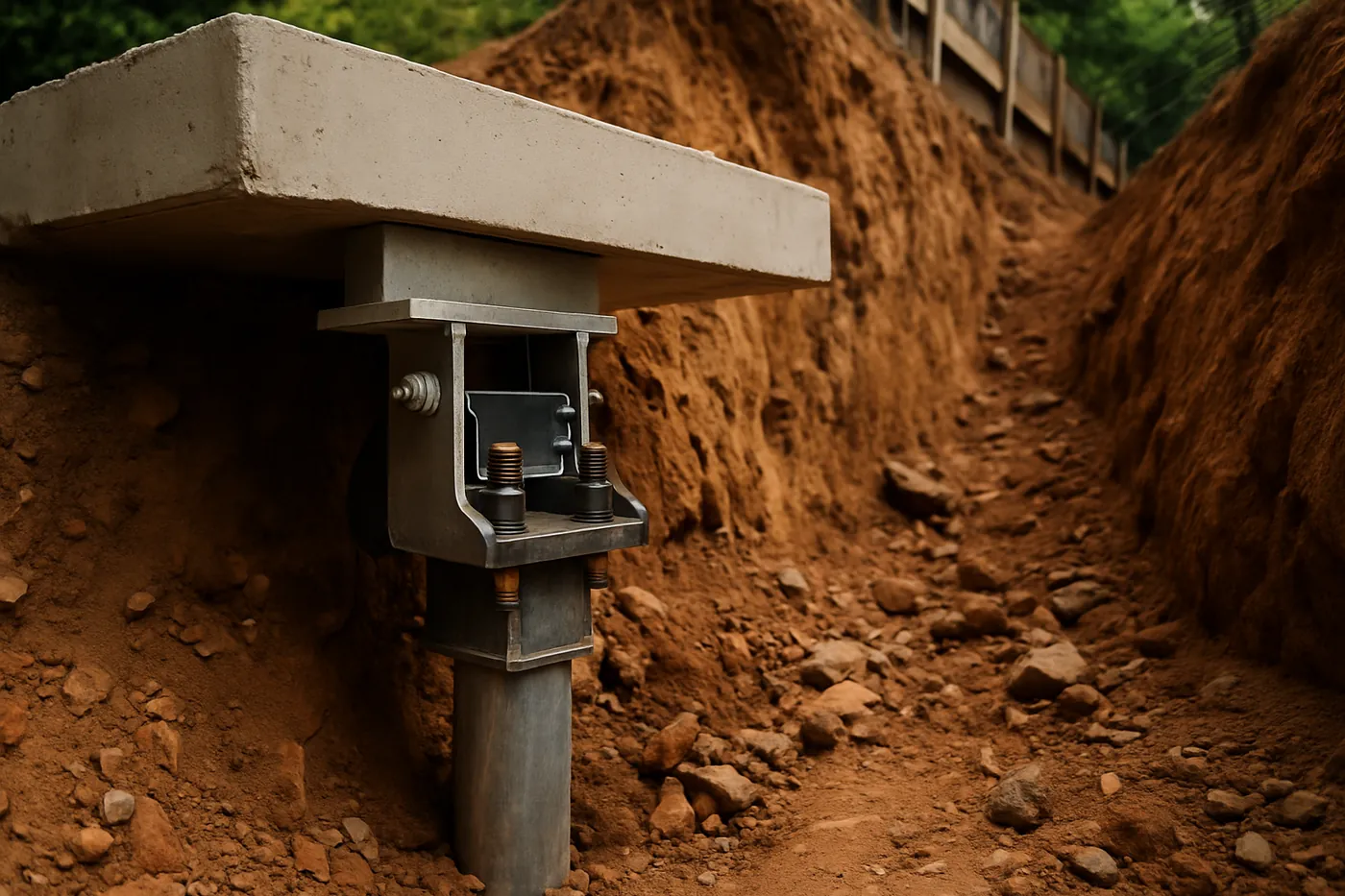
| Push piers on the filled half | $1,200–$3,000 per pier | Heavier masonry homes with the weight to drive to refusal |
| Helical piers | $1,400–$3,200 per pier | Advancing through fill of uncertain composition, or supporting light structures and additions |
| Drainage only | $1,500–$6,000 | Elevations still close to flat and symptoms clearly tracking heavy rain |
| Monitoring, no work yet | Free | Readings flat and cracks unchanged through a full wet-and-dry cycle |
| Piering the uphill half | Rarely justified | Only where readings show that side actually moved — check before paying for it |
Six things that belong in a Birmingham pier bid
- Elevations taken right across the footprint rather than beside the damaged wall
- A pier layout justified by those readings, showing which half of the pad it addresses
- A stated depth assumption and a written per-foot rate beyond it
- A commitment to per-pier logging of depth and termination material
- Lift target stated plainly — stabilize where it is, or recover a defined amount
- Warranty language naming what is covered: the piered section, or the house
That last line does more work in this market than anywhere else we operate, which is why it has its own section on the cost guide.
Piering, answered plainly
What does foundation piering cost in Birmingham?
Most full repairs run $4,000-$15,000, with individual piers commonly $1,200-$3,000 each. On a benched hillside pad the count is usually driven by how much of the footprint sits over the filled portion, because that is the half that moved. Piering the cut half is generally wasted money and we will say so.
Why would only half my house need piers?
Because on sloping ground a level pad is manufactured, not found. The builder cuts into the hill on the uphill side and builds the downhill side up with fill. The cut half bears on ground that has been in place for a very long time. The filled half consolidates under load for years afterward.
How deep do piers go here?
Deep enough to pass through the fill and reach material that is not still settling, which varies with how the pad was built. On the filled side that can be considerably deeper than homeowners expect. Insist on a written depth assumption and a stated per-foot rate if the drive goes further.
What should a pier log actually say?
Depth reached, and what the pier terminated on. In a metro with as much made ground as this one, the second is the more important entry. A pier that stopped in dense fill is not the same as a pier that reached undisturbed material, and only the log tells you which you bought.
Push piers or helical piers?
Driven piers borrow the building's own mass to push down to refusal, which suits heavy masonry. Helicals get rotated in until a target torque is reached, producing a capacity figure at every stage of the descent - genuinely useful in fill nobody can vouch for, and the only option under porches, additions, and light framing that cannot provide reaction load.
Get a free Birmingham foundation evaluation
Describe what the house is doing — a crack that keeps opening, a door that stopped latching, floors that fall away toward one side, a retaining wall starting to lean. If you already hold a bid from somebody else, bring it and we will go through the warranty with you. Same working day reply.