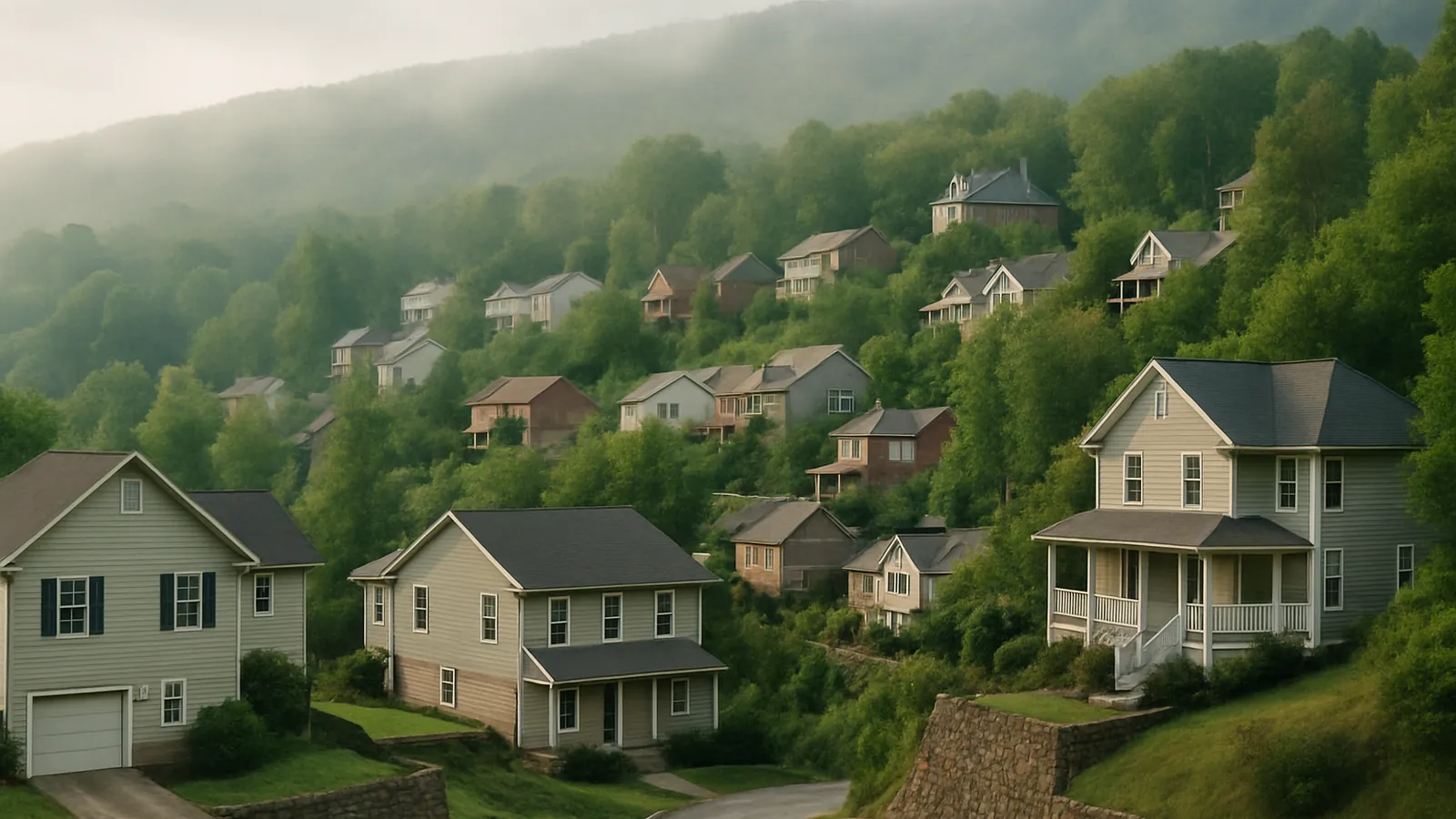
Drainage correction in Birmingham runs $1,500–$6,000, with downspout and grade work often a few hundred. The metro takes 56.6 inches a year onto red clay that swells when saturated — and in Irondale and Center Point especially, much of it arrives from higher ground.
Why interception has to happen uphill, the cheapest fixes first, and when drainage alone is enough.
Fifty-six inches, onto clay that answers
Birmingham receives 56.6 inches of precipitation in an average year in the NOAA 1991–2020 normals — more than Huntsville or Montgomery. That volume matters because of what it lands on. Iron-rich red clay expands as it takes on water and contracts as it dries, and soil that keeps changing volume against a footing is applying repeated pressure to it.
Which means water management here is not housekeeping. Evening out what the soil around a foundation receives is a structural act, and it is the cheapest structural act available.
On a slope, the source may not be yours
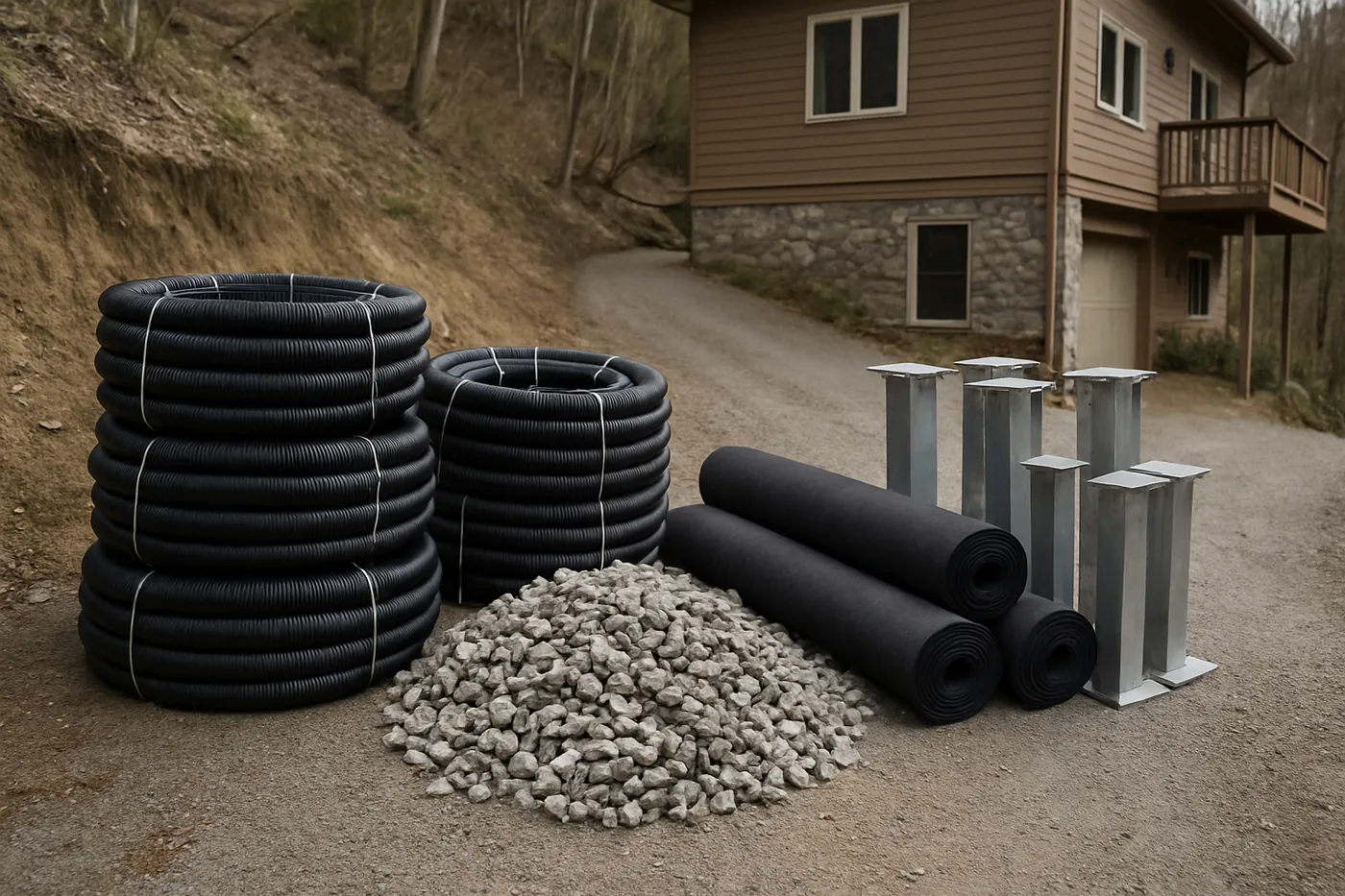
In Irondale and Center Point in particular, a good many homes sit on slopes or beside natural runoff paths. Water crossing higher ground concentrates into whatever channel the terrain offers, and if that channel leads toward your foundation, correcting your own downspouts will not change the outcome.
Interception above the house is the answer — a swale or curtain drain that catches runoff before it reaches the foundation zone. That is a different job from perimeter drainage at the wall, and it is frequently the one that actually changes what happens after a heavy rain.
Cheapest first, every time
- Downspout discharge. Get roof water well clear of the foundation. Usually the highest return item on the list and often under $300.
- Grade. Soil should fall away from the house over the first several feet. Settled backfill that now slopes inward delivers water straight down the wall.
- Gutter capacity. An overflowing gutter dumps at the wall and defeats a correct downspout run.
- Uphill interception. A swale or curtain drain where runoff arrives from higher ground.
- Perimeter drainage and sump, once the items above are handled and are not enough.
What the options cost
| Work | Cost | Where it applies |
|---|---|---|
| Longer downspout runs | $150–$600 | Effectively every property here, ahead of anything else |
| Rebuilding grade at the wall | $800–$2,500 | Backfill that has dropped and now tips inward |
| Swale or curtain drain above the house | $2,000–$6,000 | Lots receiving flow off higher ground |
| Perimeter collection with a sump | $3,000–$8,000 | Below-grade space where outdoor interception is impossible |
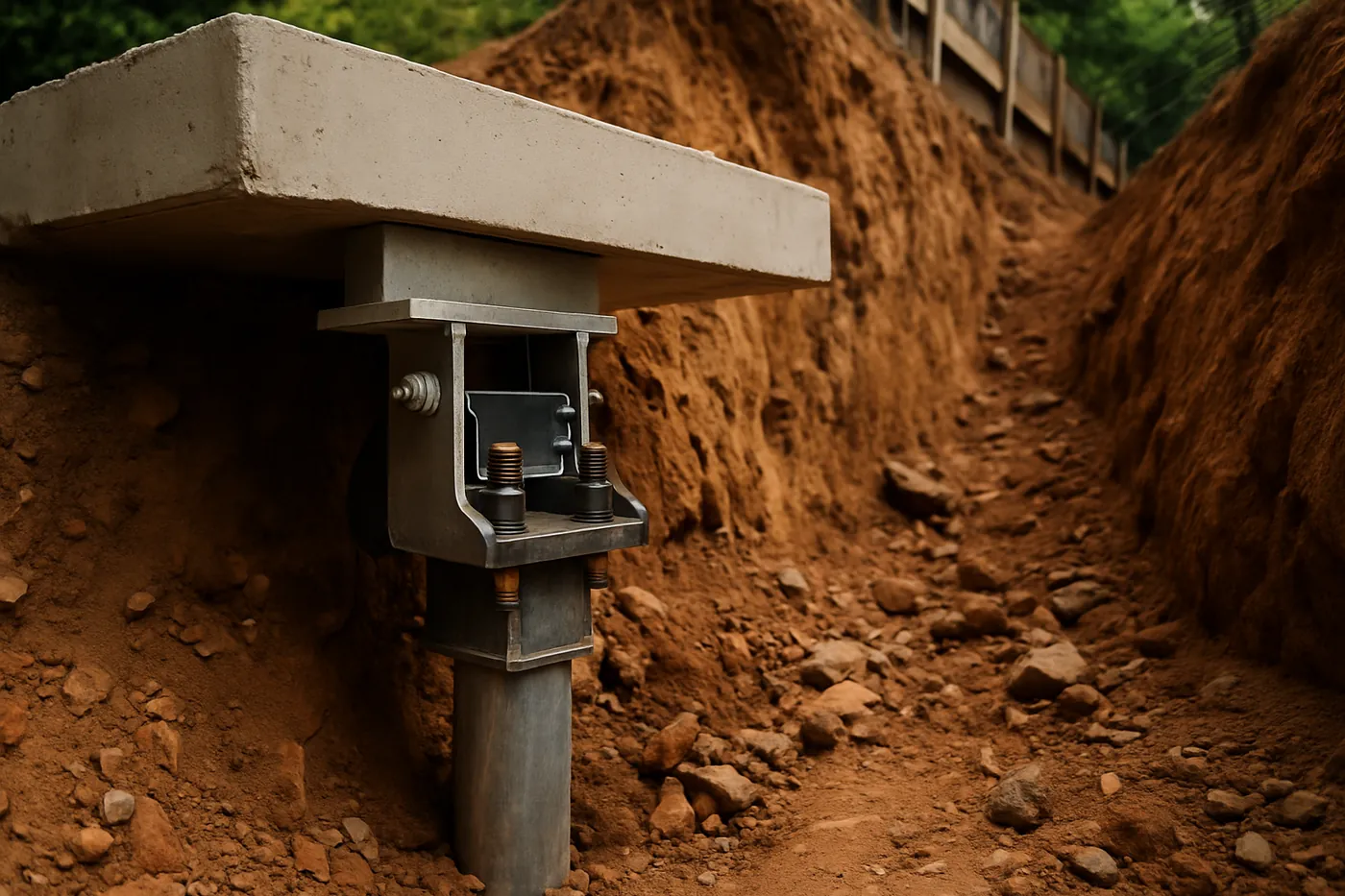
| Water plus structural work | $4,000–$15,000 | The contour already shows meaningful fall over the fill |
Cases where water work is the entire job
Caught early, and considerably more often than this trade likes to concede. Readings near level across the footprint, cracks still hairline, symptoms plainly tied to heavy rain — that combination means getting the water under control can halt the whole sequence before bearing is compromised. The numbers get reported to you regardless, including the ones saying you have no need of us this year.
Once readings show meaningful drop, drainage becomes a companion to structural work rather than a substitute for it. Both halves are priced in the cost guide.
Water, answered plainly
What does drainage correction cost in Birmingham?
Drainage work generally runs $1,500-$6,000 depending on volume and where the water can be discharged. Extending downspouts and rebuilding grade is often a few hundred. On a sloped lot the cost is usually set by whether interception has to happen uphill of the house rather than at the wall.
Why is drainage such an issue in Irondale and Center Point?
Many homes in those communities sit on slopes or close to natural runoff paths, so after heavy rain water collects against foundation walls rather than passing by. With 56.6 inches falling a year onto clay that swells when saturated, that concentration is a structural issue and not just a wet-yard complaint.
Does drainage fix a foundation that already moved?
Drainage doesn't fix a foundation that already moved, and any company saying otherwise is overselling. Water control stops a mechanism; it does not restore elevation or re-support material that has already consolidated. It is the right first purchase when elevations are still close to flat, and a necessary companion to structural work when they are not.
Where should water be intercepted on a sloped lot?
Above the house, not at the wall. Runoff crossing a property concentrates in whatever channel the terrain provides, and correcting your own downspouts does nothing about water arriving from higher ground. A swale or curtain drain placed uphill is a different job from perimeter drainage, and on these lots it is often the one that matters.
What can I do myself?
The three cheapest items carry most of the benefit. Extend downspouts well clear of the foundation, keep gutters from overflowing at the wall, and rebuild any grade that has settled back toward the house. On red clay that responds strongly to moisture, evening out what the soil receives is genuinely structural work.
Get a free Birmingham foundation evaluation
Describe what the house is doing — a crack that keeps opening, a door that stopped latching, floors that fall away toward one side, a retaining wall starting to lean. If you already hold a bid from somebody else, bring it and we will go through the warranty with you. Same working day reply.