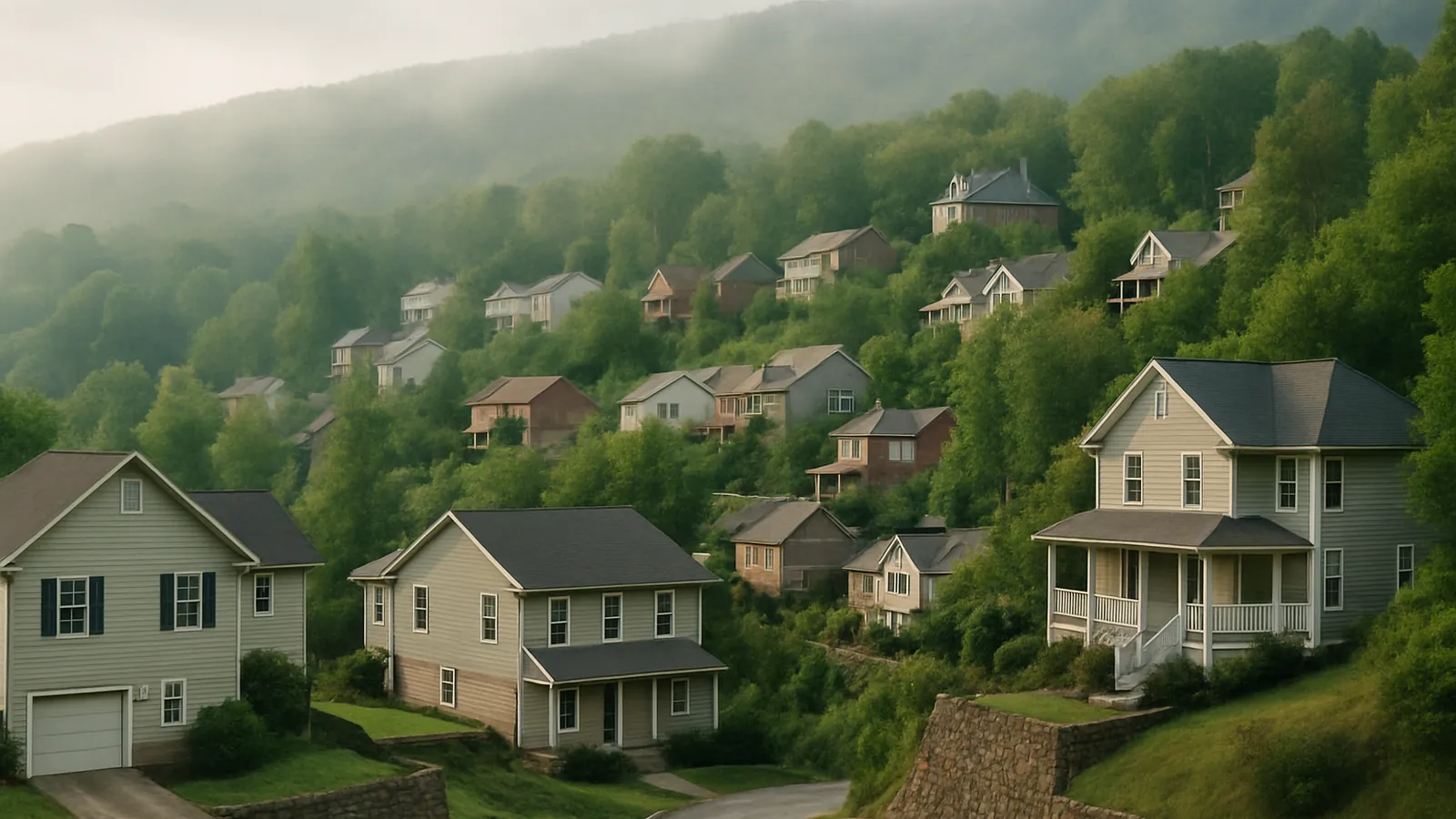
Birmingham Foundation Co. serves Birmingham plus Hoover, Vestavia Hills, Homewood, Trussville, Bessemer, Irondale, Center Point, Mountain Brook, and Helena. Every one gets the same free elevation survey, and travel, where it applies, appears as its own line.
HooverVestavia HillsHomewoodTrussvilleBessemerIrondaleCenter PointMountain BrookHelena
Every town we cover, and what changes there
Each of these has its own page, because the ground and the housing stock are not the same across the region. The short version:
Hoover — Pads built by the hundred
Hoover absorbed an enormous amount of residential development, much of it on rolling ground that had to be graded before anything could be built. Read what that means for a Hoover property.
Vestavia Hills — Steep enough that the walls are doing work
Lots here climb, and a great many of them were made buildable with retaining walls. Read what that means for a Vestavia Hills property.
Homewood — Two footings, two eras
Homewood’s older neighborhoods carry houses built long before current footing practice, on compact lots, and a good number of them have grown over the decades — a sunroom, a den, a primary suite pushed off the back. Read what that means for a Homewood property.
Trussville — Graded as a whole, lived in lot by lot
Trussville took a great deal of growth on land that was agricultural within living memory, and subdivision grading is engineered as a single system rather than parcel by parcel. Read what that means for a Trussville property.
Bessemer — Made ground has a history
Bessemer grew as an industrial town, and industrial towns accumulate made ground: material placed during a century of building, regrading, demolishing, and rebuilding. Read what that means for a Bessemer property.
Irondale — The water arrives from above
A good many Irondale homes sit on slopes or close to natural runoff paths, which produces a specific and well-known local pattern: after heavy rain, water collects against foundation walls rather than passing the house by. Read what that means for an Irondale property.
Center Point — Older houses, modern runoff volume
Center Point’s housing stock skews toward the postwar decades, built with the footing depths and drainage assumptions of that era. Read what that means for a Center Point property.
Mountain Brook — Mature canopy on clay that responds
Old streets come with old trees, and where soil changes volume according to how wet it is, a substantial hardwood standing close to a footing has to be counted as part of the structural picture. Read what that means for a Mountain Brook property.
Helena — Ask what happens when you sell
Helena has grown quickly and its housing changes hands, which puts a question on the table that most homeowners never think about until a closing: does the foundation warranty transfer, and what does transferring it cost? Read what that means for a Helena property.
Four versions of the same terrain
Over the Mountain — Vestavia Hills, Mountain Brook, Homewood — sits on genuine grade, so pads are benched, retaining walls do structural work, and mature canopy adds a moisture variable on clay. The growth suburbs — Hoover, Helena, Trussville — are newer construction on graded ground, where fill consolidation shows in years three through eight and builder warranties are sometimes still open.
The slope-and-runoff communities — Irondale and Center Point especially — have many homes on slopes or near natural runoff paths, so water collects against foundation walls after heavy rain and produces wall cracking rather than settlement. The industrial west — Bessemer — carries a century of made ground, where what a pier terminates on matters more than how deep it went.
Three constants across all ten
Level ground was built. On ridge-and-valley terrain a flat pad is manufactured by cutting one side and filling the other, so the two halves of a house sit on materially different ground.
Movement has a direction. Consolidation runs downhill, over the filled half, usually inside the first decade. That makes this one of the more diagnosable foundation markets we work.
Clay answers to the weather. 56.6 inches a year onto iron-rich red clay produces a seasonal layer that reverses, riding on top of consolidation that does not.
What foundation repair costs across both counties
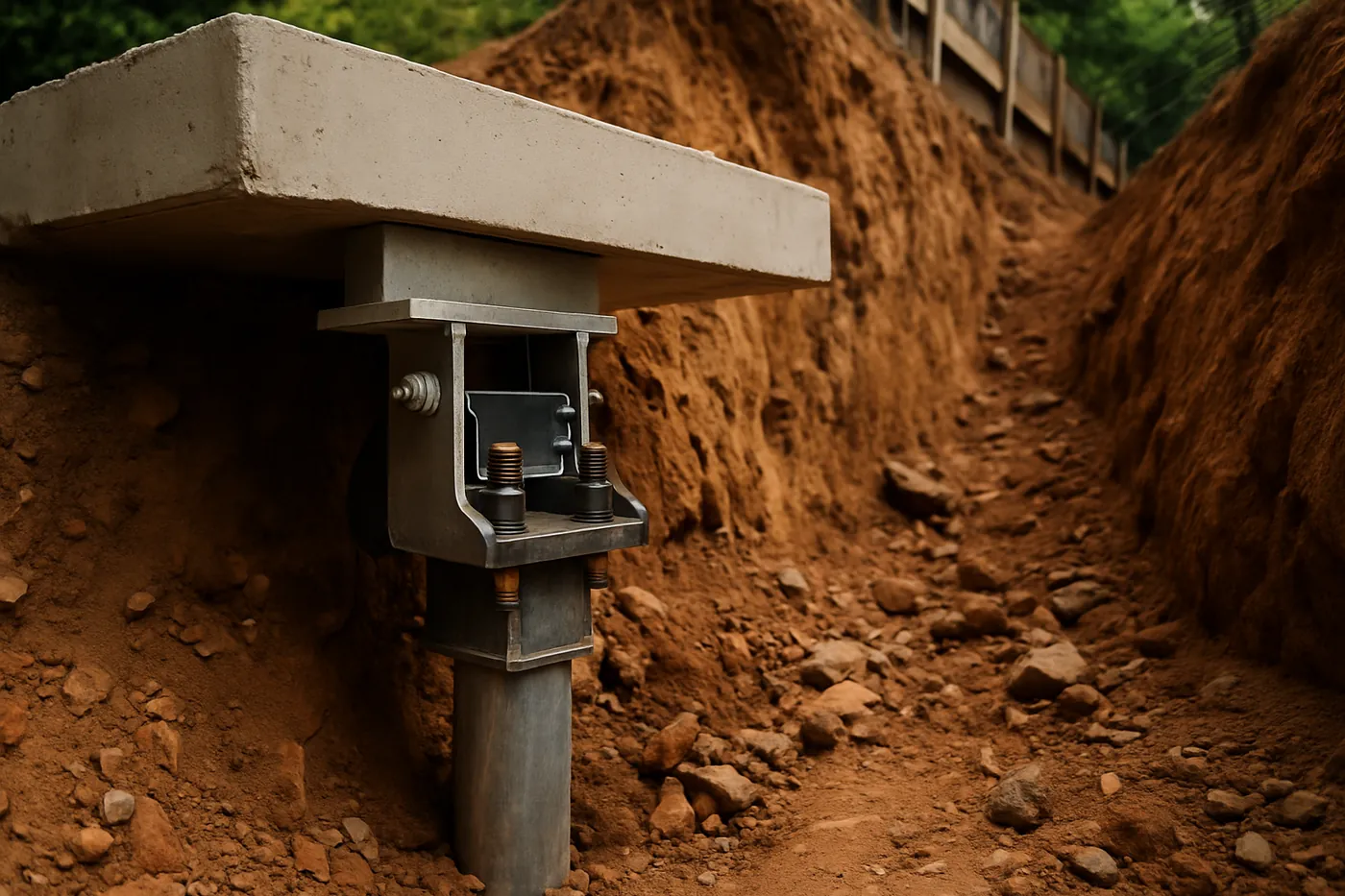
We do not price by community. Full repairs run $4,000–$15,000, piers $1,200–$3,000 each, slab work $3,500–$12,000, and drainage $1,500–$6,000 whether the house is in Mountain Brook or Bessemer. What changes is which the survey calls for. The cost guide breaks every class out, including the four warranty questions worth asking every company bidding here.
Address not on this list? Tell us where it is and we will give you a straight answer — the working radius runs wider than these ten.
Service area questions
Is there a travel charge outside Birmingham?
Not for the nine communities on this page. Jefferson and Shelby counties are inside our standard working radius, so Helena costs what Center Point costs. Past those county lines travel becomes a visible line item with a figure attached, quoted on the phone rather than in the invoice.
Does the problem change from one community to another?
The mechanism holds; the presentation shifts. Over the Mountain communities bring steep pads and retaining walls. Irondale and Center Point bring slope runoff at foundation walls. Bessemer brings industrial-era made ground. Newer suburbs bring open builder warranties. That changes what we examine first.
How fast can you reach my community?
Usually within a day or two anywhere on this list. Anything tied to a closing date moves ahead of the queue, because those dates do not negotiate. If the week is genuinely full we say so rather than booking you out and hoping.
What does the free evaluation include out in the county?
The same readings plus a longer walk outdoors: floor elevations across the footprint, dated crack measurements, and the full water path including ditch lines, culverts, and where runoff crosses from higher ground. Larger properties simply take more time to cover.
What it means when we say we cover a town
It means the free measured evaluation happens at your address on the same terms it would in Birmingham — the same laser floor survey and crack measurements, the same written scope afterwards, and travel quoted as its own line rather than buried inside the others. If a job is far enough out that travel is material, you will see that number before you agree to anything.
Foundation work is scheduled, not urgent — which means an outlying address costs you nothing in response time.
These 9 communities are where we work regularly enough to know the ground before we arrive. That is the honest boundary: not a radius drawn on a map, but the places we have looked at enough properties to recognise what we are seeing.
Get a free Birmingham foundation evaluation
Describe what the house is doing — a crack that keeps opening, a door that stopped latching, floors that fall away toward one side, a retaining wall starting to lean. If you already hold a bid from somebody else, bring it and we will go through the warranty with you. Same working day reply.