
Foundation settlement repair in Birmingham runs $4,000–$15,000, piers $1,200–$3,000 each. The dominant local cause is fill consolidation on a benched hillside pad — which runs one direction, downhill, and usually appears in a house’s first decade.
The three mechanisms working here, how the survey tells them apart, and why one of them is genuinely forecastable.
Three mechanisms, one metro
Fill consolidation. The big one, and the one that gives this market its signature. A level pad on sloping ground is created by cutting into the hill and building the low side up. The filled half compresses under building load for years afterward, so the house tilts gently toward the downhill side.
Red clay cycling. Iron-rich clay expands when saturated and contracts through dry warm stretches, and 56.6 inches of annual rain drives that hard. This movement reverses — doors that bind in one season and free up in another — which is the clearest way to tell it from the first mechanism.
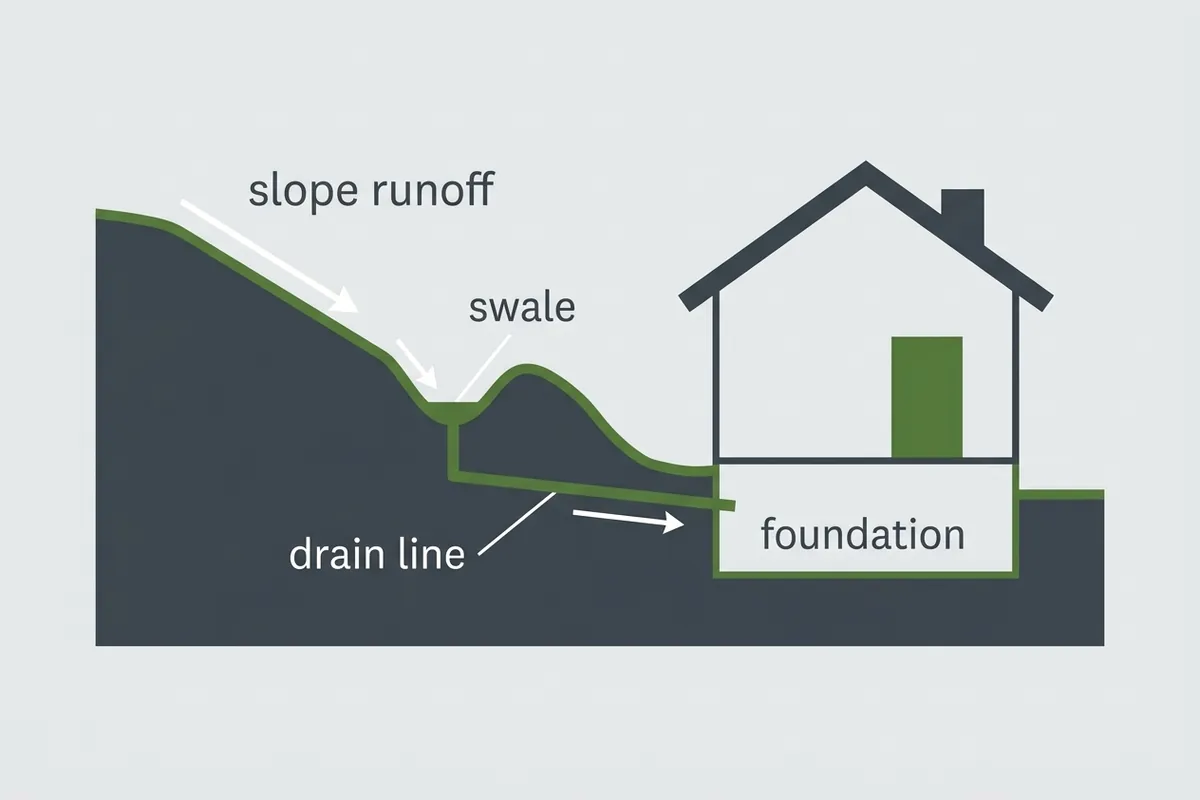
Slope water. In Irondale and Center Point especially, homes sit on slopes or near natural runoff paths, so water concentrates against foundation walls after heavy rain. That produces lateral pressure and wall cracking rather than the settlement pattern the other two create.
Reading which one you have
| Evidence | Fill consolidation | Red clay cycling |
|---|---|---|
| Crack width over months | Widens only, one direction | Opens in dry spells, closes after wet ones |
| Doors and windows | Progressively worse | Bind seasonally, then release |
| Floor contour | Falls consistently toward the low side of the lot | Irregular, changes through the year |
| Age of house | Frequently years three through eight | Any age, ongoing |
| Typical scope | Piers over the filled half | Moisture control, piers only if drop is real |
Why the contour is the whole diagnosis
Elevation readings across a full footprint produce a shape, and on a benched pad that shape tends to be unmistakable: flat across the uphill portion, falling steadily across the downhill portion, with the transition running roughly along the original contour of the hillside.
When a survey comes back looking like that, we are not inferring a cause — we are reading the construction history off the floor. It tells us where piers belong, how many, and just as usefully where they would be wasted. A bid produced without that contour is a bid produced without the argument.
What you should end up holding
- Elevation figures covering the whole footprint, written down and yours to keep
- The total differential and where the low area sits relative to the slope
- Crack widths measured and dated, so future change is checkable
- An exterior review — downspouts, grade, and where runoff arrives from
- Which mechanism the evidence supports, stated plainly, including “not enough yet”
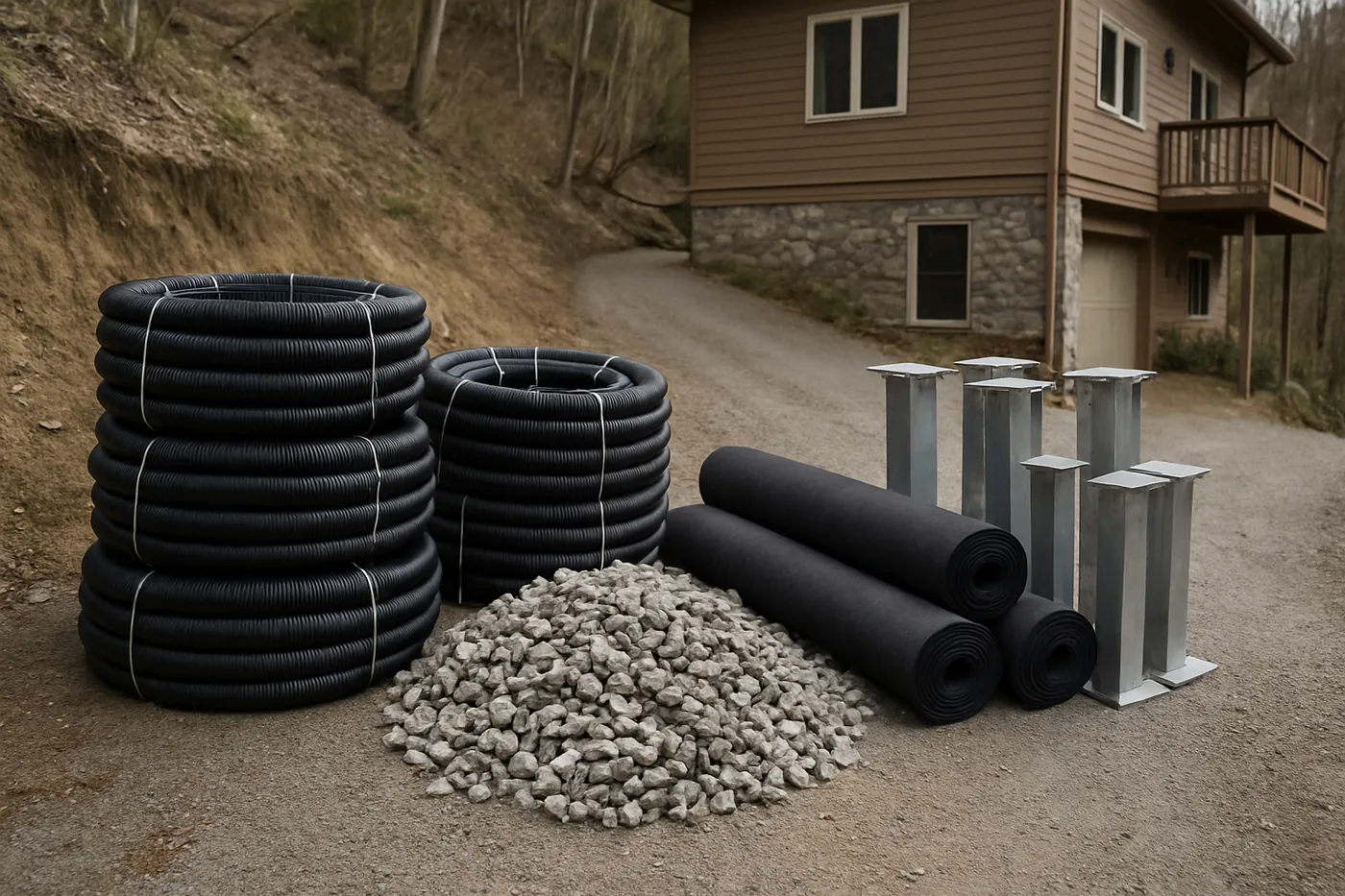
- A pier layout justified by the contour, if piers are recommended at all
We hand that document over whether or not you hire us. If the readings are flat, the honest recommendation is monitoring plus a few hundred dollars of water control, and we will write it that way. Everything is priced in the cost guide.
Settlement, answered plainly
What does foundation settlement repair cost in Birmingham?
Most settlement repairs run $4,000-$15,000, piers commonly $1,200-$3,000 each. The spread narrows quickly once floor elevations are taken, because on a benched hillside pad the readings usually show which half of the footprint is involved and the pier layout follows from that.
How is settlement here predictable?
Because the dominant local cause is construction rather than geology. A pad benched into a slope has undisturbed ground on the uphill side and placed fill on the downhill side, so the differential runs one direction - downhill - and typically shows in the first decade. That is a more forecastable pattern than most soil markets produce.
How long does engineered fill keep settling?
Compacted to specification and left alone, a well-built pad performs indefinitely. Fill placed quickly, in poor weather, or without the testing the specification called for consolidates under building load for years. That is why movement on newer construction here commonly appears in years three through eight rather than immediately.
My house is only six years old. Is this normal?
Recognizable enough around here that we can usually name it before arriving, and not something to sit on. Establish whether the builder warranty has expired before writing anyone a cheque, since grading, drainage, and occasionally structural performance carry defined coverage periods.
What does a floor elevation survey show?
The shape of the problem. Readings across the whole footprint produce a contour of the floor - where the low area is, how deep, and which direction it falls. On a hillside pad that contour usually matches the original slope, which both confirms the mechanism and shows exactly where support belongs.
Get a free Birmingham foundation evaluation
Describe what the house is doing — a crack that keeps opening, a door that stopped latching, floors that fall away toward one side, a retaining wall starting to lean. If you already hold a bid from somebody else, bring it and we will go through the warranty with you. Same working day reply.