
Concrete leveling in Birmingham costs $500–$2,500 for driveways, patios, walkways, and porch slabs. On a benched hillside pad, flatwork over the filled half settles before the house does — which makes a sinking driveway an early signal worth reading rather than just correcting.
What leveling does and does not do, why the sunken side matters, and how to keep a lift from repeating.
How the lift is done
A pattern of small ports goes through the slab, expanding polyurethane goes in through them, and the slab comes up in stages while somebody watches the surface for movement. Ports get patched when it is done. Driveways generally take traffic again within a few hours and most other flatwork is usable the same afternoon.
The reason foam rather than slurry matters here has nothing to do with convenience. Mudjacking introduces significant weight, and placing additional load on fill that has not finished consolidating works against the thing you are trying to fix. Foam raises the slab without adding much of anything.
Read the drop before you correct it
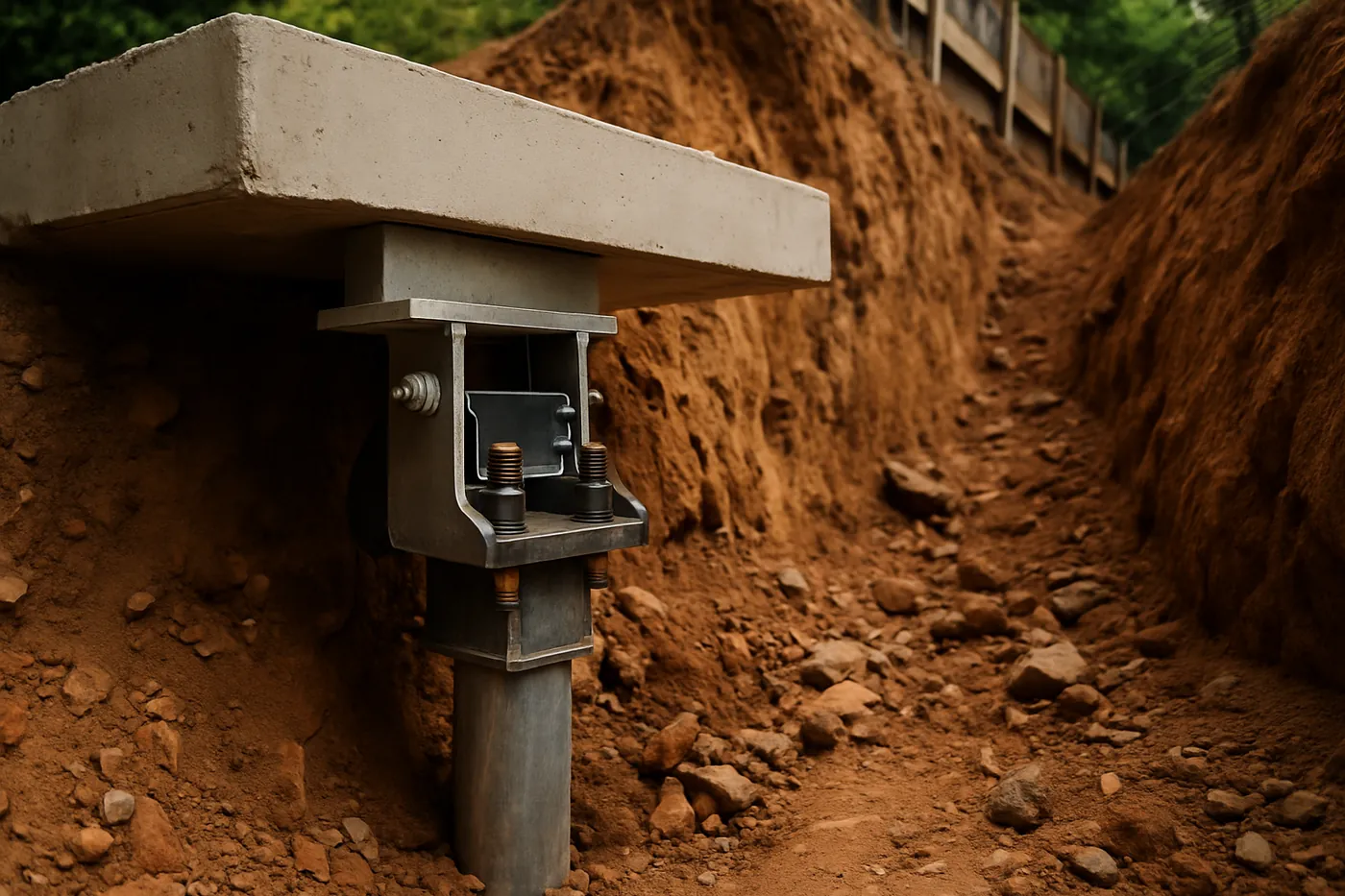
Concrete flatwork weighs a fraction of what a house weighs and has none of its stiffness, so it registers uneven support long before the building above does. A driveway dropping along one edge on a benched lot is very often bearing on the identical fill carrying the low half of the house. It simply arrived at the conclusion earlier.
Which is why the level goes inside before the foam goes outside. It costs five minutes and nothing else. Flat readings indoors mean raise the slab and stop thinking about it. Readings that fall the same direction the driveway fell mean the concrete repair just bought you a diagnosis, at the lowest price that diagnosis will ever carry.
The boundary between this and structural work
Flatwork is the whole remit here. Foam restores a surface and occupies the space under it, and that is genuinely all it does — there is no engineered transfer of building load to competent bearing, so it replaces nothing that piering accomplishes. Should anyone offer to resolve a settled house with injection alone, the questions to put to them are what capacity the system is designed for and whose seal is on the design.
Some slabs are past it
Not every piece of concrete is worth raising, and saying so before money changes hands is simply fairer. Once a slab has broken into enough pieces it no longer behaves as one plane, so raising it delivers a patchwork of misaligned sections rather than a driveway. Surface that has spalled through or lost its wear layer will be deteriorating just as fast at the new elevation.
Rough guide: a slab in two or three sound pieces that close up flush is worth lifting. A slab in ten pieces with crumbling edges belongs in a replacement conversation at a price that has nothing to do with this page. That judgment gets made at the visit, not after somebody has drilled ports.
Making the lift last
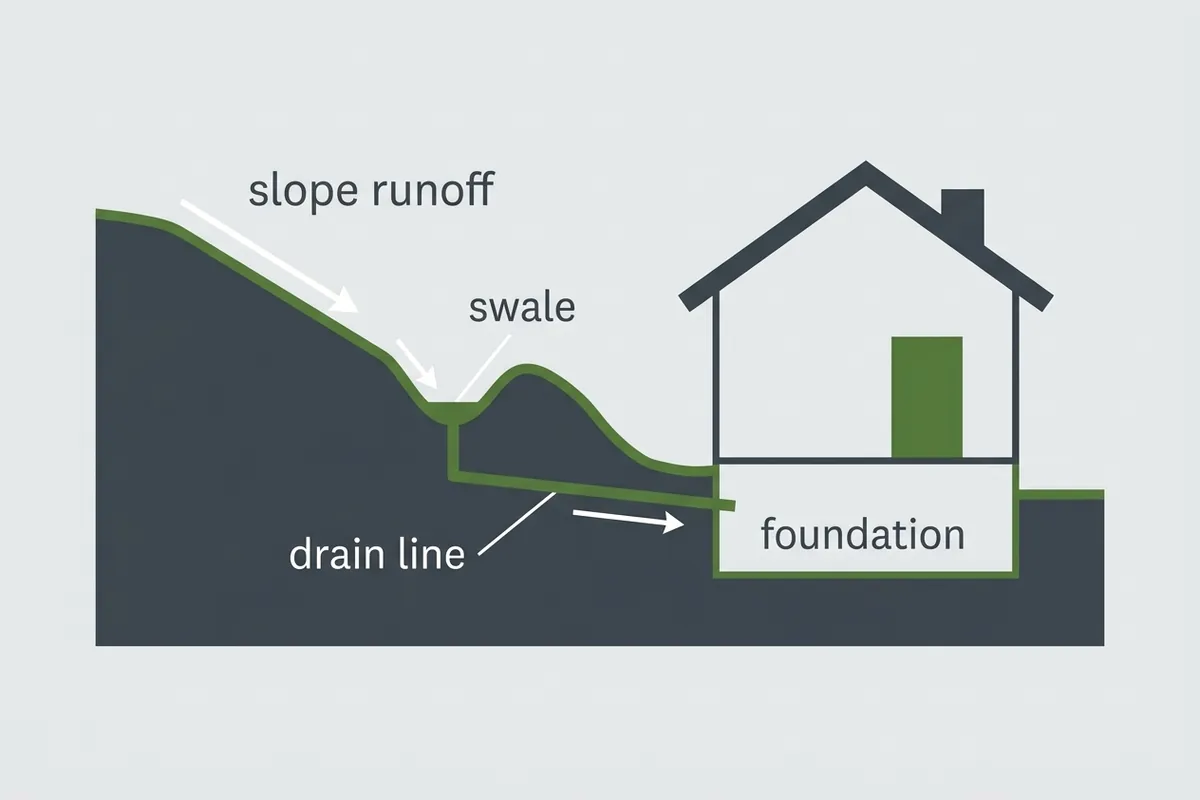
The foam itself is inert and stays put indefinitely. What returns is the original cause, and on these lots that is usually roof water landing at the slab edge, which will scour out fresh material on precisely the schedule it scoured out the base underneath. We point at the contributing condition on the day, and the fix is usually a drainage line running in the hundreds. Figures are in the cost guide.
Flatwork, answered plainly
What does concrete leveling cost in Birmingham?
Reckon on $500-$2,500 for drives, patios, walks, and porch slabs, with area and material take driving the figure. Flatwork on the low side of a benched lot tends to swallow more foam than the visible sag implies - it is bearing on the same fill the downhill half of the house is.
Is concrete leveling the same as foundation repair?
Different work entirely. This raises flatwork by putting material underneath it, with nothing engineered about how building load reaches bearing. Out-of-level floors inside the house belong to piering, and foam pumped under a home is not a substitute for that.
Why does my driveway sink on one side only?
Usually because that side sits over the filled portion of the pad and the other side sits over cut. Flatwork is lighter and less rigid than a house, so it registers that difference sooner - which makes a sinking driveway one of the cheapest early warnings available on a hillside lot.
Should I level the concrete or check the house first?
Check the house, then decide. It takes minutes to run elevations inside and see whether the structure shows the same pattern in the same direction. If it does not, lift the concrete and get on with your day. If it does, you have found something worth knowing while it is still inexpensive.
How long does the lift last?
The material does not wash out or decompose, so the fill is durable. What ends a lift early is the condition that caused it - a downspout eroding the slab base, or fill still consolidating underneath. We identify which applies while on site rather than lifting the same slab twice.
Lift it, support it, or replace it?
Flatwork fails differently on a hillside. Over the Mountain, a driveway often sits half on cut ground and half on fill from when the pad was benched, and the fill side is the side that drops.
| Option | What it does | The local deciding factor |
|---|---|---|
| Foam injection | Ports drilled, expanding foam raises the panel | Quick and light on red clay, provided the fill underneath has finished consolidating |
| Slurry pumping | A cement mix floats the slab back to grade | Suits heavier panels where the void under the downhill edge is shallow |
| Piered support | Load carried to firmer ground before resetting | The answer where a benched pad's fill side is still compressing — foam cannot fix that |
| Tear-out and repour | The panel is replaced rather than lifted | Right when slope movement has already broken the panel into pieces |
On made ground — and an industrial metro has more of it than most — what sits under the slab matters more than what is injected into it. Lifting concrete over fill that is still settling buys a season, not a repair.
Get a free Birmingham foundation evaluation
Describe what the house is doing — a crack that keeps opening, a door that stopped latching, floors that fall away toward one side, a retaining wall starting to lean. If you already hold a bid from somebody else, bring it and we will go through the warranty with you. Same working day reply.